Ayesha Riaz
As winter is about to bid adieu, how can we forget to talk about the delicious spirals of sweetness also known as jalebi? This hot and crispy dessert is the winter specialty of the Sub-continent. It’s heavenly and sweet crunching taste leaves the mouth wanting for more. Eating it hot with dripping in sweet sugary syrup is the real fun. The golden-yellow goodness is also taken with warm milk as a cure for headaches and cold in winter in Pakistan and North India. Jalebis are also loved during festivals and special occasions in both countries.
Texture of Jalebi
Jalebi with a thin crispy layer on the outside and soft chewy and sticky texture on the inside which is filled with sugar syrup is considered to be a perfect jalebi. If the jalebi is left in sugar syrup for the extra time, it becomes soggy and loses its taste.
Some people prefer to put ‘chashni’ or sugar syrup over the jalebi instead of dipping in it which gives it a crystallized sugar coating. It can also be served with the topping of garnished dry fruits.
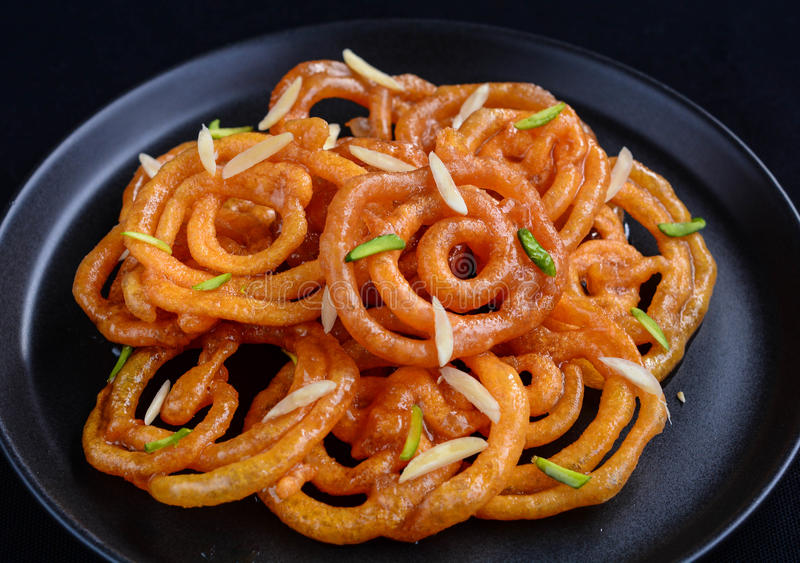
Imratee is a similar dessert as jalebi but is quite different in taste and color. Its orange in color whereas jalebi has a natural yellowish golden color. Both the sweets are popular because of their mouthwatering and distinct taste among desi people.
History of Jalebi
Many of you may think that jalebi is originated from India but it’s absolutely not true. Neither the delicacy nor the name ‘jalebi’ is originally Indian. The word Jalebi is derived from an Arabic word Zulabiya or in Persian Zolbiya.
As per the historical record, jalebi’s oldest reference was cited in a cookbook written by Muhammad Bin Hassan from Iran in the 13th century. It was mentioned in the book that during the month of Ramadan, the sweet savory is in the top list of charity foods for the needy. Persian speaking Turkic invaders introduced the jalebi to the Indian sub-continent during medieval times.
Ingredients
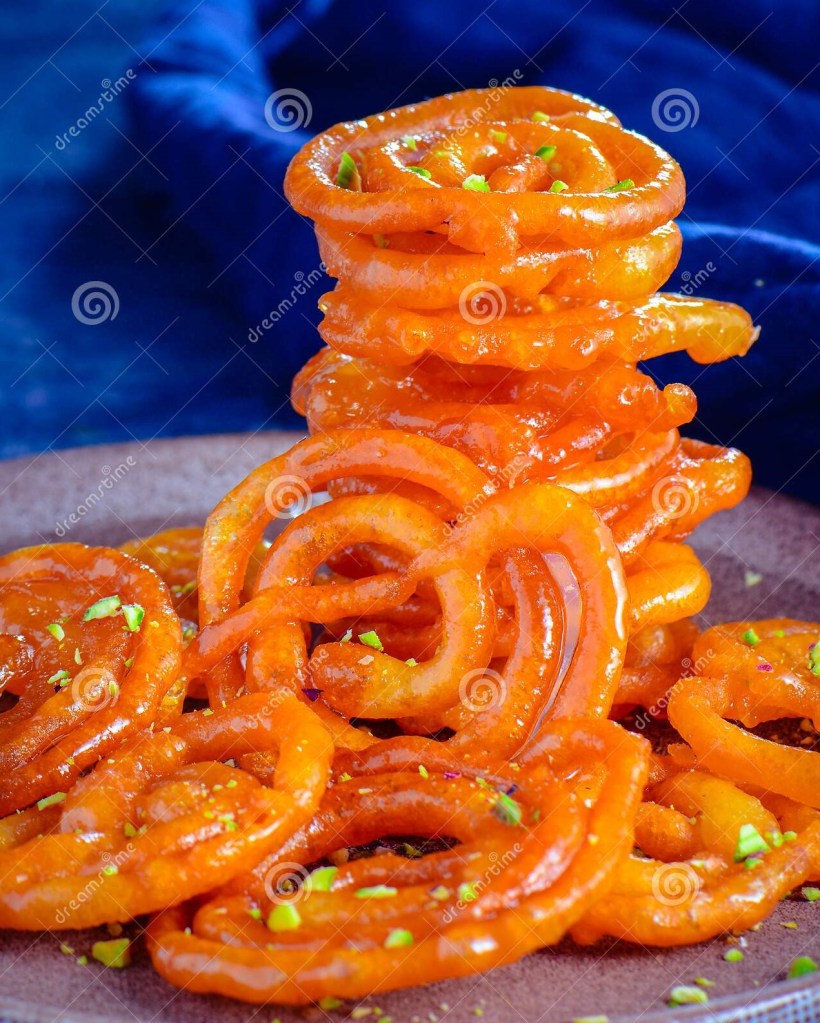
The preparation of jalebis includes various ingredients like gram flour, wheat flour, all-purpose flour or maida, rice flour and semolina which is rarely used for preparing the batter. Lime juice or sour curd are ingredients that can be used to give a slightly tangy flavor with sweet. Sugar for syrup, ghee or oil, baking powder, saffron, and cardamom are the other main ingredients for the making of jalebis. There is no specific need for adding artificial color because its natural color is bright yellow-golden which makes the mouth to water at its vibrant sight.
Making of Jalebi
There are two methods of making a jalebi; traditional method and instant method. In the traditional method, the batter made from flour and curd requires fermentation for 24 hours whereas, in the instant method, fermentation is not needed because instant yeast does its work during the preparation of batter. You can try any method at home but traditional method make jalebis more tasty.
The preparation of this delicacy requires three main steps.
- The batter is prepared by mixing flour and curd (or lime juice) either using the instant method or traditional method.
- Sugar syrup is prepared.
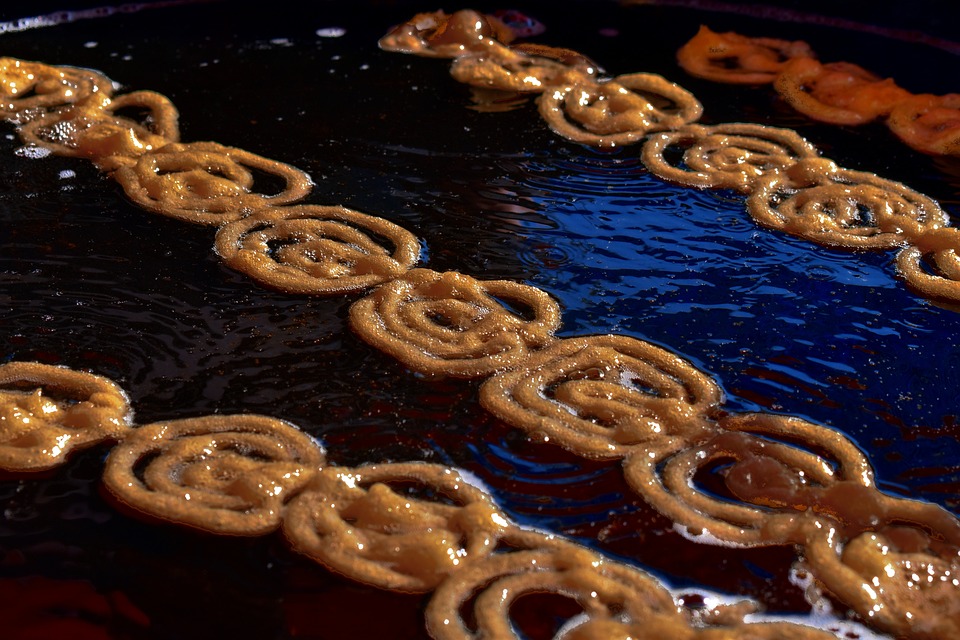
- Lastly, twisted spirals are made from the prepared batter directly into the hot oil or ghee and deep-fried until crispy and yellow in color. Then it is soaked in warm sugar syrup also called chashni. This is the traditional way of making jalebi.
Where to buy Jalebis in Lahore?
Jalebis are available at any local sweet shop in every city of Pakistan. The cost of jalebis can vary depending on the ingredients, locality or popularity of the shop
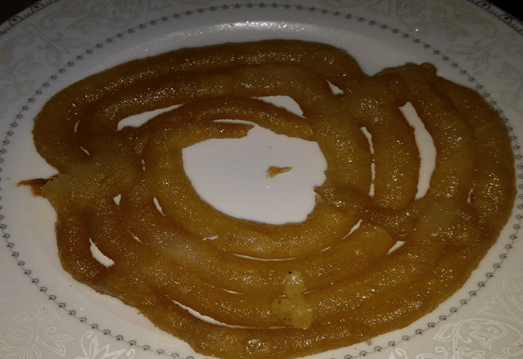
Grato Jalebi is the most famous shop in Lahore where you can find different types of jalebis. It includes dry jalebis, extra sweet jalebis which are soaked for some time in sugar syrup, jalebis with light sweetness and jalebis dipped in jaggery(Gurr) syrup. The prices vary from Rs. 350/Kg – Rs. 1000/Kg.
 The Diary of Food Explorers